
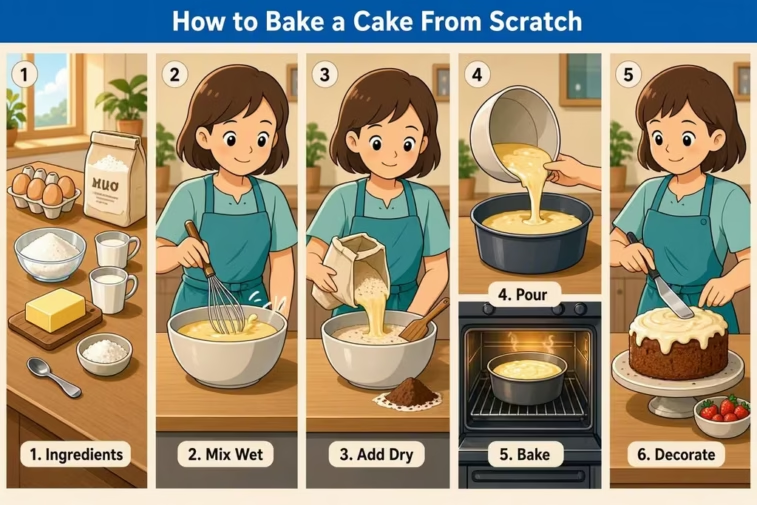
Learn how to bake a cake, moist, tender cake from scratch — with gram measurements, the science behind each step, and fixes for the 7 most common cake fails.
Most “how to bake a cake” guides give you a list of ingredients and a set of steps and leave you to figure out why your cake still came out dense, dry, or sunk in the middle. This guide is different: every step explains why it matters, so when something goes wrong, you’ll know exactly which step to fix — not just which recipe to try next.
Why Most Beginner Cakes Fail (Read This First)
Before the recipe, understand this: baking is chemistry, not cooking. In cooking, “close enough” usually works. In baking, the ratio of flour to fat to liquid to leavening determines whether your cake rises evenly, holds together, and stays moist — and that ratio is unforgiving of guesswork. How to Bake a Cake From Scratch; The single biggest fix available to any beginner is switching from measuring cups to a kitchen scale. Cup measurements of flour can vary by up to 20% depending on how it’s scooped, and that variance alone explains most “why is my cake dense” problems reported by first-time bakers.
How to Bake a Cake From Scratch: What You’ll Need
Equipment:
- Two 8-inch or 9-inch round cake pans
- A kitchen scale (strongly recommended over cups)
- A hand or stand mixer
- Parchment paper
- A wire cooling rack
- An oven thermometer (most home ovens run 15–25°F off their dial setting)
Ingredients (makes one two-layer 8-inch cake):
| Ingredient | Weight | Volume (approx.) |
|---|---|---|
| All-purpose flour | 280g | 2¼ cups |
| Granulated sugar | 300g | 1½ cups |
| Baking powder | 10g | 2½ tsp |
| Salt | 4g | ¾ tsp |
| Unsalted butter, softened | 170g | ¾ cup |
| Eggs, room temperature | 4 large | — |
| Whole milk, room temperature | 240ml | 1 cup |
| Vanilla extract | 8g | 2 tsp |
Room-temperature ingredients aren’t a suggestion — cold eggs or milk hitting creamed butter can cause the mixture to split, which traps less air and produces a denser crumb. How to Bake a Cake From Scratch; Set everything out 45–60 minutes before you start.
Step-by-Step Instructions
1. Preheat and prep your pans
Set your oven to 350°F (175°C) and let it fully preheat — don’t trust the “preheated” beep; give it an extra 10 minutes to actually stabilize. Grease both pans, line the bottoms with parchment rounds, and dust the sides lightly with flour. How to Bake a Cake From Scratch; This combination (grease + parchment) is the most reliable way to prevent sticking without leaving a greasy residue on the finished cake.
2. Combine the dry ingredients
Whisk the flour, baking powder, and salt together in a separate bowl. This distributes the leavening evenly through the flour before it meets any liquid — skip this and you risk pockets of the cake rising unevenly.
3. Cream the butter and sugar
Beat the softened butter and sugar together on medium speed for a full 3–4 minutes, until visibly pale and fluffy — not just combined. This step physically beats air pockets into the fat, and those pockets are what give the cake its initial lift before the leavening agents take over in the oven. Rushing this step is the #1 hidden cause of a flat, dense cake.
4. Add the eggs one at a time
Add eggs individually, beating for about 20–30 seconds after each before adding the next. Adding them all at once can cause the batter to split, since the butter mixture can only absorb so much liquid at a time.
5. Alternate dry ingredients and milk
Add the flour mixture and milk in three additions, starting and ending with flour (dry → wet → dry → wet → dry). Mix on low speed and stop as soon as each addition disappears into the batter. This alternating method keeps the batter from becoming too wet or too stiff at any point, which keeps the gluten development gentle — the goal is a tender crumb, not a chewy one.
6. Stop mixing the moment it’s smooth
Once the last of the flour disappears, stop. Overmixing develops gluten strands (the same protein structure that makes bread chewy), which is the second most common cause of a dense or tough cake, right behind under-creaming the butter.
7. Divide and bake
Split the batter evenly between the two pans — a kitchen scale here ensures both layers bake at the same rate and come out the same height. Bake for 25–30 minutes, checking at the 22-minute mark. The cake is done when a toothpick inserted in the center comes out with a few moist crumbs (not wet batter, and not completely dry).
8. Cool correctly
Let the cakes rest in their pans for exactly 10 minutes — long enough to firm up, not so long that they steam and go soggy on the bottom. Then run a knife around the edge, turn them out onto a wire rack, and let them cool completely (at least 1–2 hours) before frosting. How to Bake a Cake From Scratch; Frosting a warm cake is one of the most common reasons frosting slides off or melts into the crumb.
The Science, Briefly
- Butter and sugar aren’t just flavor — creaming them mechanically incorporates air, which expands in the oven’s heat.
- Baking powder is a chemical leavener that releases carbon dioxide twice: once when it meets liquid, and again when it hits oven heat. That’s why batter should go in the oven soon after mixing.
- Gluten, formed when flour proteins meet liquid and are agitated, gives cakes structure — but too much of it (from overmixing or using bread flour) makes cake chewy instead of tender.
- Milk fat and sugar both interfere with gluten formation, which is part of why cakes are naturally more tender than bread even with similar mixing.
Troubleshooting: Fixing the 7 Most Common Cake Problems
- Cake sank in the middle; Usually underbaking, an oven that’s running cool, or opening the oven door too early. Verify your oven’s real temperature with an oven thermometer and resist opening the door before the 20-minute mark.
- Cake is dense or heavy; Almost always under-creamed butter and sugar, or flour packed too tightly into a measuring cup. Weigh your flour and cream the butter mixture longer than feels necessary.
- Cake is dry; Overbaking is the top cause — pull it at the first sign of moist crumbs on a toothpick, not a completely clean one. Over-measured flour is the second most common cause.
- Cake domed on top instead of flat; The oven is likely too hot, causing the edges to set before the center finishes rising. Try dropping the temperature by 15°F and baking slightly longer.
- Cake stuck to the pan; Skipped or insufficient greasing/parchment, or the cake was left in the pan to cool for too long before turning out.
- Cake has large tunnels or holes inside; Overmixing after the flour was added — this develops gluten unevenly and traps large air pockets instead of the fine, even crumb you want.
- Cake tastes eggy or flat; Old baking powder loses potency; test it by dropping a spoonful in hot water — it should fizz immediately. How to Bake a Cake From Scratch; If it doesn’t, replace it before your next bake.
Common Variations Once You’ve Nailed the Base
- Chocolate cake: Replace 60g of flour with 60g of cocoa powder and add an extra 30ml of milk to compensate for cocoa’s dryness.
- Vanilla bean cake: Swap vanilla extract for the seeds of one scraped vanilla bean for a more intense, speckled result.
- Gluten-free cake: Substitute a 1:1 gluten-free flour blend that includes xanthan gum — plain gluten-free flour alone often produces a crumbly result.
- Dairy-free cake: Substitute the milk with a full-fat plant milk and the butter with a neutral vegan butter block (not spreadable tub margarine, which has too much water content).
Frequently Asked Questions
- Why does my cake recipe say to use room-temperature ingredients? Cold butter, eggs, or milk can cause the batter to split or fail to emulsify smoothly, which reduces the air trapped during creaming and results in a denser cake.
- Can I substitute oil for butter? Yes, but the texture changes — oil produces a moister, denser crumb since it stays liquid at room temperature and doesn’t hold air the way creamed butter does. Oil-based cakes (like most carrot or chocolate cakes) are built around that difference; don’t swap oil into a recipe designed for creamed butter without adjusting the method.
- How do I know my cake is actually done without a toothpick? Gently press the center with a finger — it should spring back rather than leave a dent. The cake should also have started pulling slightly away from the pan’s edges.
- Why did my two cake layers bake unevenly? Uneven batter distribution between pans is the most common cause — weigh each pan’s batter rather than eyeballing it. Oven hot spots are the second most common cause; rotate pans halfway through baking if your oven runs unevenly.
- Can I make the batter ahead and bake it later? Not recommended — baking powder starts reacting the moment it meets liquid, so batter that sits too long before baking will have lost some of its rise by the time it goes in the oven. If you need to prep ahead, measure dry and wet ingredients separately and combine just before baking.