
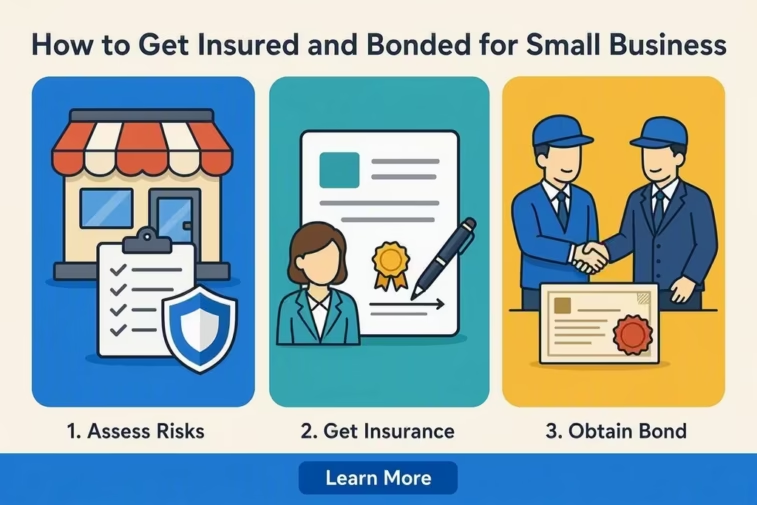
Learn exactly how to get insured and bonded for small business in 2026. Bonded and Insured Difference, Step-by-step process, real costs, SBA programs, and insider tips to protect your company and win bigger contracts.
Introduction: Why “Bonded and Insured” Matters More Than Ever
If you run a small business—especially in construction, cleaning, consulting, or any trade that works in clients’ homes or offices—you’ve almost certainly seen the phrase “must be bonded and insured” in a contract, job posting, or licensing requirement. But what does it actually mean, and how do you get there without wasting money on the wrong coverage?
The stakes are higher than most owners realize. Roughly 75% of small businesses are underinsured, leaving them exposed to lawsuits, accidents, and contract breaches that could wipe out years of work. At the same time, being properly bonded and insured is often the single fastest way to unlock larger contracts, government work, and client trust.
How to Get Insured and Bonded for Small Business; This guide cuts through the confusion. You’ll learn the exact steps to get insured and bonded, what it costs, how the SBA can help, and how to avoid the most common mistakes that cost small business owners thousands every year.
How to Get Insured and Bonded for Small Business: The Difference That Changes Everything
Before you buy anything, you must understand that bonds and insurance are not the same thing. How to Get Insured and Bonded for Small Business; They protect different people, work in opposite directions, and are priced differently.
- Insurance protects you. When you buy a general liability policy or workers’ compensation, the insurance company pays claims on your behalf—and you do not have to pay that money back. Insurance is a two-party contract between you and the insurer.
- Bonding protects your clients. A surety bond is a three-party agreement between your business (the principal), the client or government agency (the obligee), and the surety company. If you fail to fulfill a contract, the surety pays the client—but you are legally obligated to reimburse the surety for that payout.
Here’s the simplest way to remember it: insurance protects you; bonds protect your customers from you.
How to Get Insured and Bonded for Small Business; A fidelity bond is the one exception. It protects your clients from employee theft, and unlike other surety bonds, you do not have to repay claims made against it.
| Feature | Surety Bond | Insurance |
|---|---|---|
| Protects | Client / public | Your business |
| Parties involved | Three (principal, obligee, surety) | Two (policyholder, insurer) |
| Repayment | You must reimburse the surety | No repayment required |
| Purpose | Guarantees performance | Covers losses and liability |
Step 1: Determine What You Actually Need
Every business has different requirements based on industry, state, and the clients you serve. Start by researching three sources:
- Your state licensing board. Many professions—contractors, notaries, mortgage brokers, auto dealers—cannot get a license without proof of a surety bond. Check your state’s requirements before you do anything else.
- Your contracts and leases. Many commercial leases and client agreements require minimum insurance limits and specific bond types. Read the fine print before you buy.
- Your industry standards. Even when not legally required, some industries treat bonding as a de facto requirement. Commercial cleaning companies, for example, almost always need a business service bond to win large contracts.
If you’re unsure, contact your state’s small business development center or an experienced surety agent. They can tell you in minutes what applies to your situation.
Step 2: Get Insured
Insurance is usually the simpler half of the equation—but only if you buy the right coverage. Most small businesses need at least these policies:
- General liability insurance: Covers bodily injury and property damage claims from customers or third parties. This is the foundation of almost every business insurance package.
- Workers’ compensation: Legally required in most states as soon as you hire your first employee.
- Commercial property insurance: Covers damage to your office, equipment, and inventory.
- Professional liability (errors & omissions): Essential for consultants, accountants, and anyone who gives advice for a fee.
The fastest way to get insured is to work with a business insurance broker who specializes in small businesses. Brokers can compare quotes from multiple carriers—often including top-rated names like The Hartford, Hiscox, Nationwide, and Travelers—and find coverage that matches your actual risks without overpaying.
Online platforms like Insureon and Hiscox allow you to get quotes in minutes, but for anything beyond a basic policy, a human broker is worth the small commission difference.
Step 3: Get Bonded
Getting bonded follows a similar but distinct process. Here’s exactly how it works:
- Find a surety agency. Not all insurance companies write bonds. Look for a dedicated surety bond agency or an insurance broker who works with surety carriers. If you’re pursuing government contracts, look for an agency authorized to issue SBA-guaranteed bonds.
- Submit an application. The surety will review your personal credit score, business financial statements, and industry experience. For bonds under $50,000, your personal credit score is the single biggest factor in pricing.
- Sign an indemnity agreement. This is your personal promise to repay the surety if a claim is paid on your bond. It’s standard for almost all surety bonds and one of the reasons maintaining good credit and financial records matters so much.
- Pay your premium and receive your bond. Once approved, the surety issues your bond, and you’re officially bonded.
The entire process can take anywhere from a few hours for simple, credit-based bonds to several weeks for large contract bonds that require detailed financial underwriting.
What It Costs: Real Numbers You Can Budget With
How to Get Insured and Bonded for Small Business; Surety bond costs are a small percentage of the bond amount, not the full amount. Most small business owners pay between 1% and 10% of the bond’s total value per year.
| Bond Amount | Estimated Annual Cost (Good Credit) |
|---|---|
| $5,000 | $25 – $500 |
| $10,000 | $50 – $1,000 |
| $50,000 | $250 – $5,000 |
With a strong credit score (700+), you can expect to pay 1% to 3% of the bond amount. Poor credit can push rates to 8%–15%, so improving your credit before applying is one of the smartest financial moves you can make.
Most small business owners buy bonds of $50,000 or less** and pay the minimum premium, which is often just **$100 per year.
On the insurance side, premiums vary widely by industry, location, and coverage limits. A basic general liability policy for a low-risk service business might cost $400–$600 per year, while higher-risk trades can pay several thousand.
How the SBA Surety Bond Guarantee Program Can Help
How to Get Insured and Bonded for Small Business; If you’re a small contractor trying to win government work or larger private contracts, the SBA’s Surety Bond Guarantee (SBG) program is one of the most powerful tools available.
The SBA guarantees bid, performance, and payment bonds issued by participating surety companies. This guarantee—typically covering 80% to 90% of the surety’s potential loss—allows small businesses to get bonded even when they don’t yet meet a surety’s standard underwriting criteria.
Key eligibility requirements:
- You must qualify as a small business under SBA size standards.
- Your contract must be up to $9 million for non-federal contracts** and up to **$14 million for federal contracts.
- You must pass the surety’s credit, capacity, and character evaluation.
Fees: The SBA charges a guarantee fee of 0.6% of the contract price for performance and payment bonds. Bid bond guarantees are free.
To apply, you work through an SBA-authorized surety agent who submits the application on your behalf. The process requires financial documentation, a schedule of work in progress, and standard SBA forms.
Common Mistakes That Cost Small Businesses Money
- Buying the cheapest policy without checking limits. A low premium often means low coverage limits. If your contract requires $1 million in general liability and you buy $500,000, you’ll be in breach before you even start work.
- Letting your bond lapse. License and permit bonds must remain continuously in force. If your bond cancels, your license can be suspended, and you may have to stop working until it’s reinstated.
- Ignoring the personal guarantee. Most surety bonds require a personal indemnity agreement. If your business can’t repay a claim, the surety can come after your personal assets. Never sign a bond application without understanding this.
- Waiting until the last minute. Bond underwriting takes time, especially for larger contract bonds. Start the process as soon as you know you’ll need a bond—not the week before a bid deadline.
- Confusing a fidelity bond with a surety bond. Fidelity bonds protect against employee theft and generally do not require repayment. Surety bonds protect against contract failure and do require repayment. Know which one you’re buying.
Final Thoughts: Bonding and Insurance as a Growth Strategy
How to Get Insured and Bonded for Small Business; Getting insured and bonded isn’t just about checking a box to satisfy a licensing board. It’s a competitive advantage. Bonded businesses signal to clients that they’ve been financially vetted, that their work is guaranteed, and that they operate with a level of professionalism that unbonded competitors can’t match.
The process is more straightforward than most owners expect: determine your requirements, buy the right insurance through a broker, apply for your bond through a surety agency, and keep both in good standing. If you’re pursuing government or large commercial contracts, the SBA’s Surety Bond Guarantee program can open doors that would otherwise stay closed.
Start with your state licensing board and one conversation with a surety agent. In most cases, you can be fully bonded and insured within a week—and positioned to win work you couldn’t touch before.