
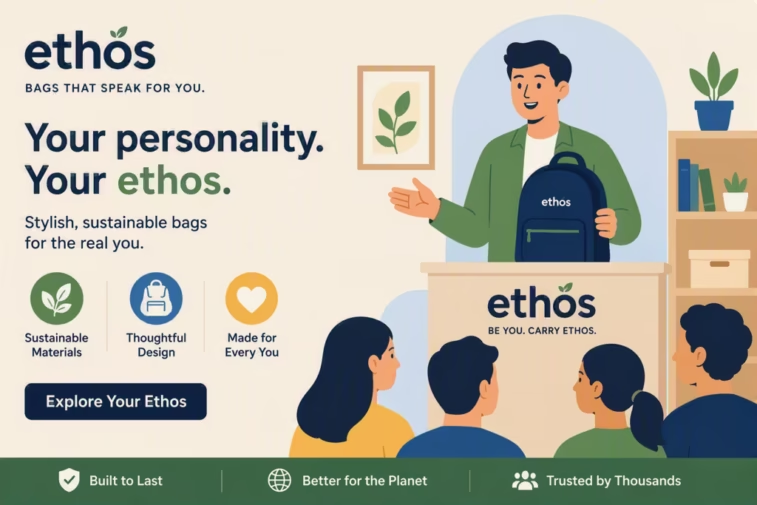
Ethos — the rhetorical appeal to credibility, authority, and character; ethos advertisement examples — is one of the most powerful tools in an advertiser’s kit.
The Trust Factor: How Ethos Wins Customers Before a Product Ever Gets Used
This article breaks down what ethos actually means in marketing, why it works on a psychological level, and how well-known brands have used it to build trust long before a customer clicks “buy.” Along the way, we look at expert endorsements, celebrity trust transfer, heritage storytelling, and social proof as four distinct flavors of ethos-driven advertising.
What Ethos Actually Means in Advertising
Aristotle identified three pillars of persuasion: logos (logic), pathos (emotion), and ethos (credibility). While logos asks an audience to think and pathos asks them to feel, ethos asks them to trust. In advertising, this translates into a simple question the consumer is unconsciously answering: “Why should I believe this brand over another?”
Ethos-based advertising doesn’t rely on flashy claims or emotional storytelling alone, ethos advertisement examples. Instead, it borrows credibility from somewhere else — Advertisement Copy, an expert, a celebrity, a long history, or the collective approval of other customers — and transfers that credibility onto the product.
Why Ethos Works: The Psychology Behind Trust Transfer
Humans are wired to defer to authority and to follow social cues, a tendency psychologists call “social proof” and “authority bias.” When people are uncertain about a decision, especially one involving money or risk, they look for shortcuts to confidence, ethos advertisement examples. A doctor in a lab coat, a five-star rating, or a hundred-year-old company name all function as mental shortcuts that say: this has already been vetted, so you don’t have to do all the vetting yourself.
This is precisely why ethos-driven ads tend to dominate categories where trust is hard-won and skepticism runs high — healthcare, finance, technology, and anything involving safety.
Four Common Forms of Ethos Advertisement Examples
1. Expert and Professional Endorsement
The most direct form of ethos is borrowing the authority of a credentialed expert. Toothpaste commercials featuring dentists, skincare ads citing dermatologists, and financial services touting certified advisors all use this tactic. The message is rarely stated outright; it’s implied through the presence of a white coat, a diploma on the wall, or a statistic like “9 out of 10 dentists recommend.”
This works because professional credentials act as a stand-in for the research a customer would otherwise have to do themselves.
2. Celebrity and Influencer Trust Transfer
When a well-known athlete, actor, or influencer appears in a campaign, the brand is renting a slice of that person’s reputation. A basketball star’s discipline and work ethic become associated with the sneaker they wear; a beauty influencer’s perceived taste becomes associated with the products in their routine. Even when audiences know the endorsement is paid, the association still shapes perception — this is why brands are so selective about matching a spokesperson’s public image to the product’s identity.
3. Heritage and Institutional Credibility
Some of the most effective ethos appeals never mention a person at all — they lean on time itself. Phrases referencing decades or centuries of craftsmanship, “family-owned since,” or founding dates signal durability and proven reliability. Insurance companies, watchmakers, and legacy food brands frequently use this approach, implying that longevity is itself evidence of trustworthiness: a company can’t survive a century by disappointing customers.
4. Social Proof and Collective Testimony
The modern internet has turned ordinary customers into a form of ethos. Star ratings, review counts, “best-seller” badges, and phrases like “trusted by millions” all function the same way an expert endorsement does — they tell the viewer that many other rational people have already made this decision, so it’s probably safe to follow.
E-commerce platforms have essentially industrialized this appeal: a product with thousands of five-star reviews doesn’t need a celebrity, because the crowd itself has become the authority.
Ethos in Action: How to Spot It
A useful exercise is to watch any commercial break and ask, for each ad, “What is this trying to make me trust, and how?” You’ll likely notice patterns:
- A financial ad opens with a founder’s story about integrity and decades of service.
- A supplement ad flashes a “clinically tested” badge before showing any product benefit.
- A car ad cites a safety rating from an independent testing organization before discussing horsepower.
- A skincare ad shows a dermatologist explaining the science, then hands the microphone to satisfied customers.
In each case, credibility is established before the emotional or logical pitch begins — because a persuasive argument that isn’t believed is worthless.
The Risk of Overusing Ethos
Ethos appeals can backfire. Audiences have grown more skeptical of paid endorsements, and a mismatch between spokesperson and product — a fitness influencer promoting fast food, for instance — can damage credibility rather than build it. The most effective ethos campaigns choose sources of authority that feel earned and relevant, not simply famous or credentialed.
Conclusion
Ethos remains one of advertising’s quiet workhorses, ethos advertisement examples. It rarely shouts; it reassures. Whether through a lab coat, a legacy, a familiar face, or a wall of five-star reviews, ethos does the essential work of answering the question every skeptical consumer asks before they buy: “Can I trust you?” Brands that answer that question convincingly earn something far more valuable than a single sale — they earn the benefit of the doubt.