
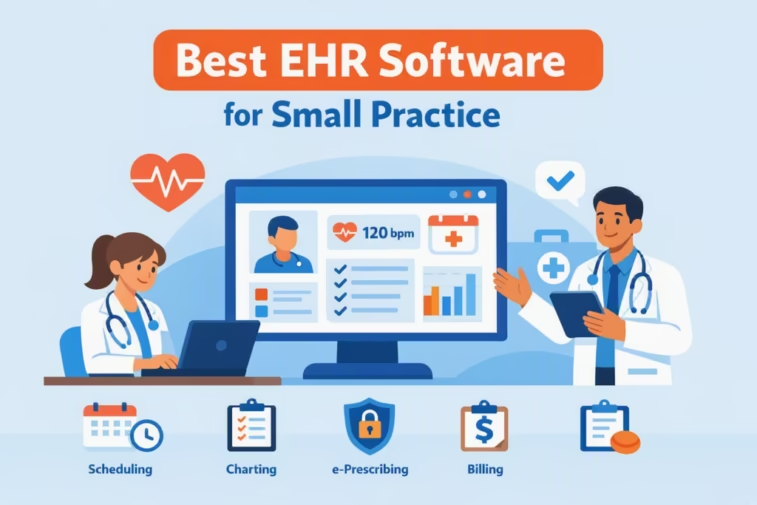
Drowning in paperwork & high EHR fees? Compare the best EHR software for small practice in 2026 — easy setup, fair pricing & faster patient charting.
Best EHR Software for Small Practice 2026
Choosing the right Electronic Health Record (EHR) system is one of the most critical decisions a small practice will make. In 2026, the EHR landscape has evolved dramatically—ambient AI scribes, full interoperability mandates, value‑based care analytics, and seamless patient engagement tools are no longer optional extras; they’re expected.
This guide breaks down the best EHR software for small practice with 1–10 providers, ranks them in a comprehensive table, and gives you a step‑by‑step process to find your perfect fit.
What “small practice” usually needs in 2026
Across 2026 buyer’s guides, the same criteria keep showing up: low total cost of ownership, simplicity, built‑in billing, and patient engagement (portal, online scheduling, telehealth). Best EHR software for small practice; A separate cost guide notes that many vendors don’t publish real all‑in costs, so transparency is a key differentiator.
EasyMindCare (easymindcare.com) is a strong fit if you want: a one‑time, lifetime license instead of ongoing subscriptions; HIPAA protections with BAA and strong data‑ownership/export guarantees; and core EHR features (scheduling, notes, telehealth, billing). From its Terms and product references, EasyMindCare is a cloud‑based EHR built for mental/behavioral health that includes: client management, clinical documentation (session notes), scheduling, billing, telehealth, and reporting.
How We Evaluated the Top EHRs for 2026
Best EHR software for small practice; Every practice has unique needs, but these six pillars formed our scoring methodology:
- Cost & Pricing Transparency – Up‑front pricing, total cost of ownership, and hidden fees.
- Ease of Use – Intuitive interface, minimal clicks per note, quick onboarding.
- Clinical & Practice Management Features – Charting, e‑prescribing, scheduling, billing/RCM, telehealth, lab integrations.
- AI & Automation – Ambient voice scribing, coding assistance, predictive analytics, automated patient outreach.
- Interoperability – TEFCA‑compliant data exchange, FHIR APIs, direct connections with labs, hospitals, and HIEs.
- Support & Scalability – Live support, training, community, and ability to grow with your practice.
10 best EHR software for small practice – Ranked Table 2026
| Rank | EHR Software | Best For | Starting Price (per provider/month) | Key 2026 Features | Rating (out of 5) |
|---|---|---|---|---|---|
| 1 | athenaOne (athenahealth) | Growing practices needing top‑tier RCM | 4–7% of monthly collections | AI ambient scribe, value‑based contract manager, TEFCA hub, population health dashboards, integrated patient app | 4.8 |
| 2 | Tebra (Kareo + PatientPop) | Independent practices, solo/group | $150–$300 | All‑in‑one EHR, AI coding suggestions, automated telehealth workflows, reputation management, modern patient portal | 4.6 |
| 3 | Elation Health | Primary care, concierge medicine | $299 | Clinical‑first UX, AI‑assisted charting, collaborative patient timeline, seamless lab/rad integrations, open API | 4.7 |
| 4 | AdvancedMD | Small‑to‑mid practices, billing focused | $429 (bundle) | Unified PM/EHR, AI‑powered RCM with claim prediction, advanced analytics, telemedicine suite, patient self‑scheduling | 4.5 |
| 5 | eClinicalWorks | Multi‑specialty, value‑based care | $449 | EVA AI assistant, PRISMA health search, payer‑side connect, population health analytics, telehealth 2.0 | 4.4 |
| 6 | DrChrono | Mobile‑first, independent physicians | $199 | iPad/iPhone native, customizable templates, AI scribe, integrated payments, telemedicine, patient check‑in kiosk | 4.5 |
| 7 | Practice Fusion | Solo providers, ultra‑low budget | Free (ad‑supported) | Cloud charting, e‑prescribing (EPCS), basic lab interfaces, vaccination registry reporting; limited AI/support | 3.8 |
| 8 | RXNT | Small practices wanting affordable suite | $110 (EHR only) | Integrated EHR, PM, billing, e‑prescribing, mobile apps, upcoming AI documentation assistant | 4.2 |
| 9 | NextGen Office | Small‑mid, specialty‑focused | $299 | Specialty‑specific content, AI voice assistant, integrated PM, telehealth, patient portal with shared decision tools | 4.1 |
| 10 | CareCloud | Data‑driven practices, analytics | $349 | Charts 2.0, Breeze patient experience, revenue cycle analytics, AI coding, robust reporting | 4.0 |
Best EHR software for small practice; Prices are estimated starting points as of June 2026; actual quotes depend on practice size, needs, and negotiations.
In‑Depth Reviews of the Best EHRs in 2026
1. athenaOne (athenahealth)
Best overall for practices that prioritize revenue cycle management and scalability.
athenahealth continues to lead by a wide margin thanks to its network‑powered platform. In 2026, it offers athenaAmbient, a fully integrated AI scribe that drafts your note during the patient encounter. The RCM module uses data from over 160M patients to predict claim denials before submission. Built‑in TEFCA connectivity ensures seamless data sharing, and value‑based contract tools help small practices succeed in alternative payment models.
- Pros: Unbeatable claims performance, continuous AI updates, strong support community.
- Cons: Percentage‑based fee can be expensive for high‑volume practices; less customizable for niche specialties.
- Ideal for: Growing practices that want to out‑optimize billing.
2. Tebra (Kareo + PatientPop)
The most complete independent practice platform.
Tebra merges Kareo’s clinical and billing DNA with PatientPop’s patient engagement and marketing prowess. The result is a modern, cloud‑based EHR that handles everything from online scheduling to automated recall campaigns. Its AI‑coding assistant reduces time‑to‑bill, and the unified platform eliminates the need for third‑party patient portals.
- Pros: Transparent subscription pricing, excellent marketing tools, minimal setup.
- Cons: RCM not as aggressive as athena; limited deep specialty workflows.
- Ideal for: Solo and small group practices that want an out‑of‑the‑box, fully digital front door.
3. Elation Health
Built by physicians, for physicians—the clinical experience is best in class.
Elation’s clean, problem‑oriented interface makes charting feel like a natural clinical conversation. In 2026, its AI‑Assisted Charting surfaces relevant history, suggests orders, and preps follow‑ups while you work. The patient timeline and collaborative notes are perfect for primary care and concierge practices that manage long‑term relationships.
- Pros: Superb user experience, open API for integrations, strong privacy focus.
- Cons: RCM is partner‑based (not fully native); smaller community than mega‑vendors.
- Ideal for: Primary care, DPC, and concierge clinics that prioritize clinical depth over billing bells and whistles.
4. AdvancedMD
A workhorse with one of the most powerful billing engines.
AdvancedMD marries a full PM system with a flexible EHR. The 2026 edition introduces ClaimGuard AI, which flags coding errors and missing modifiers in real time, and a business analytics dashboard that rivals those of larger systems. Its bundled pricing means you don’t pick and choose modules, but you get everything—telemedicine, reputation management, and scheduling.
- Pros: Strong RCM analytics, excellent training library, scalable to 50+ providers.
- Cons: Interface can feel slightly dated; longer onboarding.
- Ideal for: Small practices that treat billing as a strategic function.
5. eClinicalWorks
Feature‑packed and ideal for practices managing diverse payer contracts.
eClinicalWorks has matured into a highly modular system. The AI assistant EVA now offers ambient listening, and PRISMA allows providers to query patient data across systems with a Google‑like search. Its deep involvement with health information exchanges and the eCW Payer Connect network streamlines prior authorizations and eligibility.
- Pros: Extensive specialty templates, strong population health tools, active user community.
- Cons: Can be overwhelming; support quality varies.
- Ideal for: Multi‑specialty practices navigating value‑based care.
6. DrChrono
The most mobile‑friendly EHR, perfect for tech‑savvy physicians.
DrChrono’s iPad and iPhone apps are still unmatched, making it a favorite among physicians who roam exam rooms. In 2026, it added an integrated AI Medical Scribe and payment processing that lets patients tap‑to‑pay after the visit. The template builder is highly customizable, and the telehealth module is baked into the same app.
- Pros: Excellent mobile experience, customizable forms, integrated payments.
- Cons: RCM services are add‑on; some advanced reporting requires extra steps.
- Ideal for: Independent practices that want a single device for all workflows.
7. Practice Fusion
The only free EHR that is still a viable option for cash‑strapped solo docs.
Owned by Veradigm (formerly Allscripts), Practice Fusion is cloud‑based and offers charting, e‑prescribing, and lab integrations at no cost—funded by non‑intrusive advertising. While it lacks the AI polish of paid competitors, it covers basic documentation and Meaningful Use requirements. In 2026, it added a limited FHIR API for basic interoperability.
- Pros: Free, quick setup, decent e‑prescribing.
- Cons: No native billing, minimal support, limited customization, ads in the sidebar.
- Ideal for: Solo providers with very tight budgets who bill through a separate service.
8. RXNT
Affordable, integrated suite without long‑term contracts.
RXNT offers EHR, practice management, and billing in one package at a price point that beats most competitors. The mobile apps are solid, and EPCS (e‑prescribing of controlled substances) is included. The 2026 roadmap previews an AI documentation assistant, making it a compelling budget choice.
- Pros: Low cost, full suite, good mobile apps, no mandatory contracts.
- Cons: AI features are still emerging; fewer integration partners.
- Ideal for: Small practices wanting the basics done well without overspending.
9. NextGen Office
A specialty‑friendly EHR with a strong voice‑enabled assistant.
NextGen Office (formerly NextGen Healthcare) bundles practice management with a cloud‑based EHR that includes specialty‑specific content—dermatology, orthopedics, behavioral health, etc. The AI voice assistant transcribes and helps navigate the chart during visits. The patient portal now supports shared decision‑making aids.
- Pros: Excellent specialty templates, solid support, integrated PM.
- Cons: Can be slower to innovate compared to pure‑cloud vendors; UX occasionally clunky.
- Ideal for: Specialty practices that want a mid‑range, reliable system.
10. CareCloud
A data‑focused platform with strong reporting and patient engagement.
CareCloud’s redesign (Charts 2.0) brought a cleaner interface and tighter integration with the Breeze patient experience suite. The analytics engine turns practice data into actionable insights—appointment no‑show predictions, payer mix trends, and coding gaps. Its AI coding assistant helps optimize revenue.
- Pros: Strong analytics, modern patient portal, transparent pricing.
- Cons: Smaller market share can mean fewer peer‑to‑peer support resources; some features require add‑ons.
- Ideal for: Data‑savvy practices that want to use analytics to drive decisions.
How to Choose the Right EHR for Your Small Practice in 2026
Best EHR software for small practice; Follow this five‑step process to avoid buyer’s remorse:
- Map your must‑haves
List non‑negotiables: specialty needs, billing integration, telehealth, AI scribe, mobile access, patient portal features. - Set a realistic budget
Beyond the subscription fee, account for implementation, training, hardware, and possible lost productivity during transition. Percentage‑based models (like athena) align cost with revenue, while flat fees offer predictability. - Demo with real‑life scenarios
Don’t let a salesperson drive the demo. Ask to chart a common visit, send an e‑prescription, check a patient’s eligibility, and run a report. Have a nurse and front‑desk staff test it too. - Check interoperability and compliance
Ensure the EHR is TEFCA‑ready and can connect to your local HIEs, labs, and referral partners. Ask about FHIR APIs if you plan to use custom tools. Confirm 2026 DEA/EPCS requirements are met. - Evaluate support & training
Look for live, US‑based support, community forums, and onboarding assistance. Ask for references from practices similar to yours.
Key EHR Trends Shaping Small Practice Care in 2026
- Ambient AI Everywhere
Nearly all leading EHRs now offer ambient listening that generates structured notes from natural conversation. This reduces “pajama time” by up to 70% and lets physicians focus on the patient. - TEFCA‑Wide Interoperability
The Trusted Exchange Framework and Common Agreement is now live, and most payers require certified EHRs to share data. Your EHR should be a QHIN participant or connect via a gateway. - Value‑Based Care Built In
Even small practices are participating in MSSP or commercial APMs. EHRs now include dashboards that track quality gaps, risk scores, and cost‑of‑care metrics automatically. - Patient‑as‑Consumer Experience
Modern EHRs include self‑scheduling, two‑way chat, digital intake, and transparent billing. A patient portal that rivals consumer apps is essential to compete with retail clinics. - Cybersecurity & AI Compliance
With the FDA and ONC evolving AI regulations, your EHR must be transparent about how AI suggestions are generated and maintain robust data security.
Final Recommendations
How to choose; Best EHR software for small practice;
- Best overall value: Tebra for an all‑in‑one independent practice with modern patient engagement.
- Best clinical experience: Elation Health for primary care and concierge medicine.
- Best for maximizing revenue: athenaOne if your practice can support a percentage‑based fee.
- Best mobile solution: DrChrono if you want to run your practice from an iPad.
- Best on a shoestring: Practice Fusion (free) or RXNT (low cost) for solo providers.
- Best specialty versatility: eClinicalWorks or NextGen Office for multi‑specialty settings.
Take advantage of free trials and vendor pilot programs—most companies now offer 30‑day sandbox environments. Best EHR software for small practice; Choosing the right EHR in 2026 is not just about documenting care; it’s about creating a digital foundation that helps your small practice thrive in a rapidly changing healthcare landscape.