
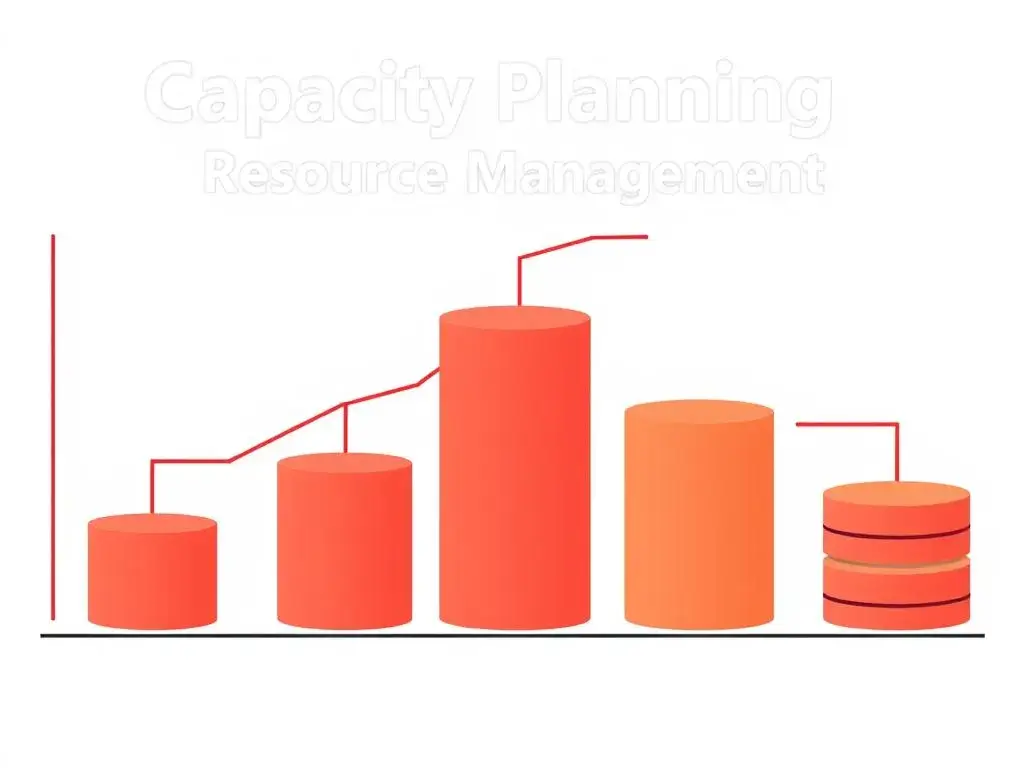
Optimize your operations with effective capacity planning resource management strategies to improve efficiency and meet business demands.
Capacity Planning Resource Management: An In-Depth Analysis
Optimize team performance with expert capacity planning and resource management. Boost efficiency & prevent burnout. Achieve project success!
Meaning and Definition
Capacity planning in resource management refers to the systematic process of evaluating, forecasting, and allocating resources—such as personnel, equipment, materials, and infrastructure—to ensure an organization can effectively meet current and anticipated demands without overextension or underutilization. It involves analyzing workload requirements against available capabilities to maintain operational equilibrium.
At its core, this practice bridges strategic forecasting with tactical execution, enabling entities to optimize productivity while mitigating risks associated with resource shortages or excesses. In broader terms, it encompasses both quantitative assessments, like calculating resource hours needed for projects, and qualitative considerations, such as skill matching and adaptability to market fluctuations.
Key Features
Capacity planning in resource management is characterized by several integral components that facilitate its implementation and effectiveness:
- Demand Forecasting: Utilizes historical data, trend analysis, and predictive modeling to anticipate future resource needs, incorporating variables like seasonal variations or economic shifts.
- Resource Inventory Assessment: Involves cataloging available resources, including human skills, technological tools, and physical assets, to identify gaps or surpluses.
- Scenario Simulation: Employs modeling techniques to test various “what-if” scenarios, allowing for proactive adjustments in response to potential changes in demand or supply.
- Integration with Tools and Systems: Often leverages software for real-time tracking, automation of allocations, and integration with project management frameworks.
- Performance Metrics Monitoring: Tracks key indicators such as utilization rates, throughput, and efficiency ratios to refine ongoing plans.
- Scalability and Flexibility: Designs plans that accommodate growth or contraction, ensuring resources can be reallocated dynamically.
- Risk Management Elements: Incorporates contingency planning for uncertainties, such as supply chain disruptions or workforce absences.
Pros and Cons of Capacity planning in resource management
Pros
- Enhanced Efficiency: By aligning resources precisely with demands, organizations minimize idle time and maximize output, potentially reducing operational costs by 15-30%.
- Improved Decision-Making: Provides data-driven insights for strategic choices, such as hiring or investing in new equipment, leading to better long-term planning.
- Risk Mitigation: Helps avoid overloads that cause burnout or underutilization that wastes budgets, fostering a more resilient operational environment.
- Scalability Support: Facilitates growth by identifying capacity thresholds early, enabling timely expansions without disrupting service levels.
- Better Resource Allocation: Ensures equitable distribution of workloads, boosting employee morale and retention through balanced assignments.
Cons
- Complexity in Implementation: Requires sophisticated forecasting tools and expertise, which can be resource-intensive for smaller organizations.
- Inaccuracy Risks: Relies on assumptions about future demands; unforeseen events like market crashes can render plans obsolete, leading to misallocations.
- High Initial Costs: Investing in software, training, and data analysis upfront may strain budgets, with returns not immediately evident.
- Over-Reliance on Data: Poor-quality input data can lead to flawed outputs, exacerbating inefficiencies rather than resolving them.
- Resistance to Change: Employees may oppose frequent reallocations, potentially causing internal friction or reduced productivity during transitions.
Examples
- Consulting Firm: A management consultancy firm tracks consultant availability against project pipelines. This reveals overcapacity in marketing expertise, prompting diversification into new services, which increases revenue streams by reallocating underused talent.
- Manufacturing Sector: A automotive parts supplier implements capacity planning by forecasting demand based on seasonal vehicle sales trends. By adjusting machine schedules and workforce shifts, they maintain a 95% utilization rate, avoiding stockouts during peak periods while preventing excess inventory buildup.
- IT Project Management: A software development firm uses capacity planning to allocate developers across multiple client projects. Through weekly reviews of billable hours and skill matrices, they identify a need for additional cloud specialists, hiring proactively to meet a 20% increase in cloud migration requests without delaying deliverables.
- Healthcare Operations: A hospital employs capacity planning to manage bed availability and staffing during flu seasons. By analyzing historical admission data, they scale nurse rotations and reserve isolation units, ensuring patient care standards are upheld even during surges, thus reducing wait times by 25%.
- Retail Supply Chain: An e-commerce retailer applies capacity planning to warehouse resources ahead of holiday sales. Forecasting package volumes allows for temporary staff augmentation and optimized shelving layouts, resulting in faster order fulfillment and a 15% drop in shipping delays.
Unlocking the Secrets of Capacity Planning in Resource Management
Capacity planning and resource management; it is the strategic process of determining the resources required to meet future project demands while optimizing workforce utilization and preventing bottlenecks. It serves as the foundation for successful project delivery and organizational growth.
📊 Core Concepts & Definitions
What is Capacity Planning in Resource Management?
Capacity planning is a forward-looking, strategic process that assesses an organization’s ability to meet future resource needs by analyzing the maximum workload teams or individuals can handle within specific timeframes. It differs from resource planning in scope:
| Aspect | Capacity Planning | Resource Planning |
|---|---|---|
| Scope | Organization-wide – strategic overview of all projects and resources | Project-specific – tactical allocation of resources to individual tasks |
| Focus | Future resource needs, hiring decisions, skill gaps | Current task assignments, daily workload distribution |
| Time Horizon | Months to years ahead | Days to weeks (immediate execution) |
| Goal | Ensure sufficient capacity to deliver all projects without overload | Optimize utilization of allocated resources on specific tasks |
Example: An IT company anticipating a 50% growth in projects next year uses capacity planning to determine they need 10 additional DevOps engineers and 2 Project Managers. Resource planning then assigns those engineers to specific sprints and tasks.
🏗️ System Architecture for Capacity Planning
Key Components & Data Flow
Based on Azure’s Well-Architected Framework, a robust Capacity planning resource management, system requires:
| Component | Function | Data Sources |
|---|---|---|
| Metrics Collection Layer | Gathers historical utilization, performance data | Time-tracking systems, project management tools (Jira, Azure DevOps), HRMS, ERP |
| Forecasting Engine | Applies statistical models to predict future demand | Historical project data, market trends, business projections |
| Capacity Calculator | Computes available capacity vs. demand | Working hours, skill inventory, vacation calendars, training schedules |
| Scenario Modeler | “What-if” analysis for capacity changes | Resource availability, hiring timelines, project acceleration impacts |
| Visualization Dashboard | Real-time capacity heatmaps and reports | Processed capacity data, gap analysis, workload forecasts |
Architecture Example: Multi-Project Resource Management System
┌─────────────────────────────────────────────────────────────┐
│                    USER INTERFACE LAYER                      │
│  (Dashboards, Reports, Capacity Heatmaps, Scenario Planner) │
└──────────────────────┬──────────────────────────────────────┘
                       │
┌──────────────────────▼──────────────────────────────────────┐
│              BUSINESS LOGIC LAYER                            │
│  • Capacity Calculation Engine                               │
│  • Demand Forecasting Models (Lead/Lag/Match)                │
│  • Gap Analysis Module                                       │
│  • Scenario Analyzer (What-If)                               │
└──────────────────────┬──────────────────────────────────────┘
                       │
┌──────────────────────▼──────────────────────────────────────┐
│              DATA INTEGRATION LAYER                          │
│  • HRMS (Employee Data, Skills, Availability)                │
│  • Project Management Tools (Jira, Asana, Azure DevOps)      │
│  • Time Tracking Systems                                     │
│  • Financial Systems (Budgets, Costs)                        │
└──────────────────────┬──────────────────────────────────────┘
                       │
┌──────────────────────▼──────────────────────────────────────┐
│              DATA STORAGE LAYER                              │
│  • Resource Inventory DB (Skills, Certifications)            │
│  • Project Demand DB (Current/Future Projects)               │
│  • Historical Utilization DB (Time-series data)              │
│  • Capacity Plans DB (Scenarios, Forecasts)                  │
└─────────────────────────────────────────────────────────────┘
📋 Data Dictionary: Key Elements
Core Data Entities
| Entity | Attributes | Purpose |
|---|---|---|
| Resource | ID, Name, Role, Skill Set (array), Proficiency Level, Standard Hours/Day, Cost Rate, Department, Location | Tracks who is available and their capabilities |
| Skill Inventory | Skill ID, Skill Name, Category, Required Certifications, Proficiency Levels | Ensures resources allocated based on right competencies |
| Project | Project ID, Name, Start Date, End Date, Priority, Status, Budget, Resource Demand (hours/FTE) | Defines what work needs resources |
| Project Demand | Demand ID, Project ID, Resource Role, Required Hours, Skill Requirements, Timeline | Quantifies resource requirements |
| Capacity Plan | Plan ID, Time Period, Available Capacity (hours), Utilization Target, Buffer % | Stores planned capacity vs. demand |
| Utilization Record | Record ID, Resource ID, Date, Hours Logged, Project ID, Task | Historical data for forecasting |
| Scenario | Scenario ID, Name, Type (Lead/Lag/Match), Variables (hiring rate, project delay), Outcome | What-if analysis for decision-making |
📐 Formulas & Calculations
Key Capacity Planning Formulas
1. Resource Capacity
Resource Capacity = Working Hours Per Day × Working Days Per Period
Example: Software engineer works 8 hours/day × 22 days/month = 176 hours/month capacity
2. Resource Demand
Resource Demand = Resource Hours Needed for Project ÷ Full-Time Resource Capacity
Example: Project needs 440 hours ÷ 176 hours/engineer = 2.5 FTE demand
3. Capacity vs. Demand Gap
Gap = Available Capacity - Resource Demand
Interpretation:
- Positive gap (+): Excess capacity, potential bench time
- Negative gap (-): Resource shortage, risk of overload/burnout
4. Utilization Rate
Utilization Rate = (Hours Logged ÷ Available Capacity) × 100
Example: Engineer logs 150 hours in month with 176 capacity → 85% utilization (healthy)
5. Forecasted Capacity Utilization
Future Utilization = (Projected Demand ÷ Forecasted Capacity) × 100
Example: Q2 projects require 500 hours, available capacity 400 hours → 125% projected utilization (critical shortage)
🎯 Capacity Planning Strategies with Examples
1. Lead Strategy (Proactive Hiring)
Definition: Add capacity before demand materializes based on forecasts
Example: IT company predicts 50% growth next year based on sales pipeline. They hire 10 engineers now, anticipating project starts in 6 months.
Risk: High bench costs if forecasts are wrong Best For: High-growth companies, critical specialized skills
2. Lag Strategy (Reactive Hiring)
Definition: Add capacity only after demand exceeds current capacity
Example: Marketing agency waits until current team is at 100% utilization for 2 consecutive months before hiring freelancers.
Risk: Project delays, employee burnout Best For: Conservative organizations, easily outsourced tasks
3. Match Strategy (Balanced Approach)
Definition: Increase capacity in phased increments based on accurate forecasts
Example: SaaS company hires 2 engineers per quarter based on confirmed customer onboarding schedule, maintaining 85% utilization.
Risk: Requires precise forecasting; oscillates between lead/lag if inaccurate Best For: Mature organizations seeking cost-delivery balance
4. Hybrid Strategy (Mixed Approach)
Definition: Use Lead for specialized skills, Lag for general support
Example:
- Lead: Hire 3 senior AI engineers now (hard to find, 6-month recruitment cycle)
- Lag: Add QA testers only when project backlog exceeds 3 sprints (easy to hire quickly)
Best For: Most organizations balancing specialized vs general resource needs
📈 Real-World Case Study: IT Development Company
A Step-by-Step Guide to Effective Capacity Planning in Resource Management;
Scenario: TechCorp plans to take on 5 additional projects (30% capacity increase) over next 6 months.
Step 1: Understand Current State
Data Collection:
- Current team: 20 developers, 4 DevOps engineers, 5 project managers
- Current capacity: 20 devs × 176 hours/month = 3,520 dev hours/month
- Current demand: 3,200 hours/month (91% utilization)
Step 2: Forecast Future Demand
New Projects Require:
- Project A: 800 hours (4 months)
- Project B: 1,200 hours (5 months)
- Project C: 600 hours (3 months)
- Project D: 1,000 hours (4 months)
- Project E: 400 hours (2 months)
- Total new demand: 4,000 hours over 6 months = 667 additional hours/month
Step 3: Calculate Gap
Total Future Demand = 3,200 + 667 = 3,967 hours/month
Available Capacity = 3,520 hours/month
Gap = 3,967 - 3,520 = -447 hours/month (negative = shortage)Conclusion: Need 2.5 additional FTE developers (447 ÷ 176)
Step 4: Scenario Analysis
Option A (Lead Strategy):
- Hire 3 developers now (cost: $450K/year salary + benefits)
- Risk: If projects delayed, 3 engineers on bench for 2 months = $75K wasted
Option B (Lag Strategy):
- Start projects with current team; hire when utilization hits 100%
- Risk: Project delays, current team burnout, missed deadlines
Option C (Match Strategy – Hybrid):
- Hire 2 developers immediately (cover Projects A, B, E)
- Delay Projects C, D by 2 months until remaining 2 developers hired
- Use contractors for Project C (600 hours = $60K) to bridge gap
Step 5: Decision & Implementation
Chosen Strategy: Hybrid Match
- Month 1: Hire 2 permanent developers
- Month 2: Start Projects A, B, E
- Month 3: Projects C, D delayed; hire contractors for Project C
- Month 4: Hire remaining 1 developer
- Month 5: Start Projects C, D with full team
Result: Projects delivered on time with 88% utilization (healthy buffer), no burnout, $60K contractor cost vs. $150K bench cost if fully staffed upfront.
⚠️ Common Pitfalls & Solutions
| Pitfall | Consequence | Solution |
|---|---|---|
| Ignoring skill inventory | Assign wrong person to task → rework, delays | Maintain updated skill database; match skills to demand |
| Static capacity plans | Becomes outdated after one project change | Update capacity plans monthly; integrate with HRMS for real-time availability |
| Over-optimistic forecasts | Lead strategy → bench costs; underutilization | Use scenario modeling; plan for 85% max utilization, not 100% |
| Not accounting for vacations/training | Unexpected capacity drops mid-project | Integrate HRMS to automatically reflect absences in capacity calculations |
| Resource silos | Teams hoard resources, limiting flexibility | Implement cross-training; track utilization across departments |
| Manual capacity planning | Excel spreadsheets → errors, outdated data | Use resource management software (Epicflow, Runn, Wrike) with forecasting |
✅ Best Practices
- Keep Capacity Data Relevant: Integrate with HRMS to auto-sync employee availability, vacations, training schedules
- Perform Scenario Analysis: Use “What-If” modeling to test hiring delays, project acceleration impacts before committing
- Balance Workloads: Monitor utilization rates; target 85% average to avoid burnout while maintaining productivity
- Regular Reviews: Update capacity plans monthly; quarterly deep reviews with leadership
- Use Leading Indicators: Track project pipeline, sales forecasts, market trends—not just historical data
- Hybrid Strategy: Combine Lead (specialized skills) + Lag (general resources) for optimal balance
- Software Integration: Connect project management tools, time tracking, financial systems for holistic view
🔗 Capacity Planning Tools Reference
| Tool | Key Features | Best For |
|---|---|---|
| Epicflow | AI-driven What-If analysis, Future Load Graph, Load Analysis, AI assistant Epica | Multi-project environments, skill-based planning |
| Runn | Strategic capacity overview, project forecasting, team planning | Service businesses, professional services |
| Wrike | Resource allocation, timeline management, workload balancing | Marketing agencies, creative teams |
| Azure Capacity Planning | Cloud resource forecasting, trend analysis for IT infrastructure | Enterprise IT, cloud-native applications |
| Bonsai | Workload capacity analysis, project timeline integration | Small agencies, consulting firms |
📈 ROI of Capacity Planning
Quantified Benefits:
- Reduced Bench Costs: Match strategy prevents over-hiring → saves 15-25% in labor costs
- On-Time Delivery: Proper capacity → 30% fewer project delays
- Lower Burnout: Balanced workloads → 40% reduction in employee turnover
- Revenue Protection: Avoid missed deadlines → protect $500K-$2M in potential revenue per project
Investment: Resource management software $50-$200/month + 4-8 hours/month for planning Payback: Typically 3-6 months for mid-size organizations
Capacity planning resource management from reactive firefighting to proactive strategy. By forecasting demands, analyzing gaps, and using scenario modeling, organizations ensure they have the right people with the right skills at the right time—balancing cost, delivery speed, and employee wellbeing.





Leave a Reply