
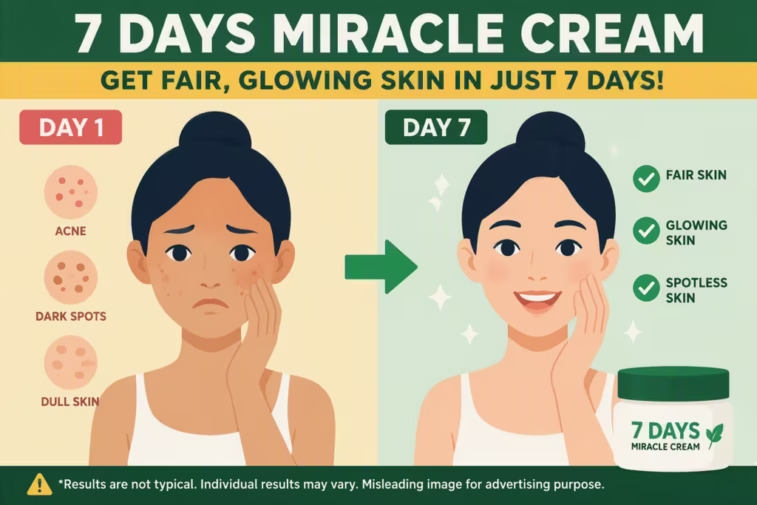
Misleading or MIS advertising doesn’t require an advertiser to tell an outright lie — leaving out a key detail, using a technically true but deceptive claim, or exploiting confusing wording can all cross the line. This guide explains exactly what makes an advertisement misleading, breaks down the tactics regulators watch for most closely, walks through real enforcement cases, and outlines what protections exist for consumers and what’s actually required of businesses.
What Misleading or MIS Advertising Actually Means
Misleading or MIS advertising is advertising that deceives, or is likely to deceive, the people it reaches — and which is capable of affecting their purchasing decisions as a result. Under most legal definitions, the deception doesn’t have to be an outright falsehood. An ad can mislead by containing false information, omitting important details a reasonable consumer would need, or by using true statements arranged in a way that creates a false overall impression.
This is a broader category than “false advertising,” and the distinction matters. False advertising typically refers to a specific, objectively untrue claim — saying a product was voted “best” by an organization that never made that ranking, for instance. Misleading or MIS Advertising covers that same territory plus a wider range of deceptive techniques that never technically state a falsehood but still leave the consumer with an inaccurate impression.
The Legal Line: Subjective Claims vs. Deceptive Claims
Not every exaggerated ad crosses into illegal territory, and understanding where the line sits is genuinely useful. Misleading or MIS Advertising: Advertisers are generally free to make subjective claims — “Best Bagels in Town!” is an opinion, not a verifiable fact, and courts and regulators typically treat it as harmless puffery. What crosses the line is an objective, independently verifiable claim that turns out to be false or deceptive — something like “Voted Best Bagel by the New York Bagel Association” when no such vote occurred.
Regulators and courts generally weigh a few consistent factors when deciding whether an ad is misleading:
- Was the claim objectively verifiable, rather than a matter of opinion?
- Would a reasonable consumer likely be deceived by the overall impression the ad creates?
- Was material information omitted that would have changed a consumer’s decision if disclosed?
- Was the deception intentional or reckless, rather than an honest, isolated mistake?
Common Tactics Behind Misleading Advertising
Misleading or MIS Advertising: Deceptive advertising rarely relies on a single crude lie. It tends to cluster around a handful of recurring tactics:
Photo Manipulation and Visual Exaggeration
Digitally altered or heavily edited images — especially common in cosmetics and food advertising — can create expectations a product simply cannot deliver on in real-world use.
Misrepresenting Origin or Quality
Claiming a product was manufactured in a particular country when it wasn’t, or showing a product with features or quality it doesn’t actually have, both fall squarely into deceptive advertising. Misrepresenting where something was made is a particularly common and closely regulated form of this tactic.
Health and Wellness Buzzwords
Labels like “diet,” “low fat,” “sugar-free,” “healthy,” and “natural” are some of the most heavily scrutinized terms in advertising precisely because they tap directly into consumer desire to make healthier choices. When a product highlights one favorable ingredient while obscuring less flattering nutritional facts, it can mislead a shopper into believing the product is healthier than it actually is.
Semantic Confusion
Some misleading advertising relies on genuinely ambiguous wording rather than a false statement. Words like “fresh,” or a geographic term used loosely enough to imply a product’s origin without stating it outright, can create a false impression through connotation rather than a direct claim.
Fake or Undisclosed Endorsements
Consumers tend to treat endorsements and reviews as inherently more credible because of the endorser’s perceived expertise or reputation. Fabricated testimonials, undisclosed paid placements, or reviews that don’t reflect a genuine, typical customer experience all fall under deceptive advertising in most jurisdictions.
Surreptitious or Stealth Advertising
A related but distinct problem is advertising disguised as independent content — sponsored placements presented as organic recommendations, without clear disclosure that payment was involved. Regulatory frameworks in the EU and elsewhere specifically treat this kind of hidden commercial intent as inherently more likely to be considered deceptive, precisely because the audience doesn’t know they’re looking at an ad at all.
Misrepresented Pricing and Sales
Advertising a “sale” price that isn’t actually discounted from a genuine prior price, or otherwise misrepresenting the terms of an offer, is one of the most commonly enforced categories of misleading advertising internationally.
Real Enforcement Cases Worth Knowing
Misleading or MIS Advertising: Regulatory action against misleading advertising isn’t rare, and a few well-documented cases illustrate how seriously agencies treat unsubstantiated claims.
In the United States, the Federal Trade Commission pursued the brain-training company Lumosity over claims that its program could improve cognitive performance and stave off age-related decline, arguing the company lacked the scientific research to back up those specific claims. The case settled for $2 million — a clear signal that health and cognitive benefit claims require real substantiation, not just plausible-sounding marketing language.
Dannon’s Activia yogurt faced similar scrutiny over claims framing the product as scientifically proven to deliver specific digestive health benefits, another example of a health-adjacent marketing claim drawing regulatory attention because the underlying science didn’t fully support the advertising.
These cases share a pattern: the products themselves weren’t necessarily fraudulent, but the specific claims made about them outpaced what could actually be proven, which is enough to trigger regulatory action in most developed markets.
Who Regulates Misleading Advertising
Enforcement varies by country, but most developed markets share a broadly similar structure:
- United States — The Federal Trade Commission (FTC) has primary federal authority, treating false and misleading advertising as an “unfair trade practice.” States maintain their own consumer protection laws as well, meaning false advertising claims can be pursued civilly and, in more serious cases, criminally.
- European Union — The European Commission has established formal evaluation criteria for determining whether an advertisement is misleading, and individual member states enforce those standards through national regulators.
- Ireland — The Competition and Consumer Protection Commission (CCPC) enforces national consumer law directly, alongside the Advertising Standards Authority for Ireland (ASA) for broader advertising standards, the Food Safety Authority for food-specific claims, and the Central Bank for advertising related to credit products.
- United Kingdom — Similar layered oversight exists through the Advertising Standards Authority and the Competition and Markets Authority.
Enforcement typically starts gently and escalates. Regulators commonly begin with a cease-and-desist letter demanding an end to the practice, and only pursue fines or, in more serious and repeated cases, criminal charges if the deceptive conduct continues.
What This Means for Businesses
For any business running advertising, a few practical safeguards go a long way toward staying on the right side of these regulations:
- Substantiate every objective claim before it goes into a campaign — if a claim can be independently verified and turns out to be false, “we didn’t think it mattered” is not a workable defense.
- Disclose material limitations clearly, rather than burying them in fine print that a reasonable consumer wouldn’t notice or understand.
- Be especially careful with health, wellness, and “clinically proven” language — this category draws disproportionate regulatory attention precisely because consumers weight it heavily in purchasing decisions.
- Disclose sponsored content and paid endorsements clearly, rather than presenting them as organic recommendations.
- Understand your insurance coverage. Many commercial general liability policies include “advertising injury” coverage that can protect against false advertising claims, but intentional deception is typically excluded from that protection — meaning the businesses most likely to face a claim are often the ones least likely to be covered for it.
What This Means for Consumers
If you believe you’ve encountered a misleading advertisement, most jurisdictions offer a clear path for reporting it — typically the national consumer protection regulator (like the FTC in the US or the CCPC in Ireland), alongside industry self-regulatory bodies like advertising standards authorities. Documentation matters: screenshots, saved pages, or copies of the specific claim in question make any complaint significantly easier to act on.
The Bottom Line
Misleading or MIS Advertising covers far more ground than an outright lie — it includes omitted information, technically true statements arranged to create a false impression, manipulated imagery, and undisclosed paid endorsements, all of which regulators around the world treat as seriously as an explicit falsehood. The businesses that stay clear of enforcement action aren’t necessarily the most cautious marketers; they’re the ones that can independently substantiate every objective claim they make and disclose the limitations a reasonable consumer would want to know before making a purchase.